 English
What Is Involved In Customization Lithium Iron Phosphate Batteries?
What Is Involved In Customization Lithium Iron Phosphate Batteries?
With the continuous progress of lithium iron phosphate battery technology and the continuous expansion of application areas, more and more electronic equipment began to use customized lithium iron phosphate battery. Customers customized lithium iron phosphate battery will involve what content, ZKbattery as a lithium iron phosphate battery custom manufacturers will introduce the main content involved in the process of customizing lithium iron phosphate battery, so that you have a further understanding of the custom battery.
Customized lithium iron phosphate batteries require a high degree of battery expertise and advanced production equipment, the main parts involved are: cell customization, BMS (Battery Management System) customization, Pack structure customization, etc., so to complete the entire customization of the entire process, the strength of the manufacturer is a certain requirement.
1: Cell customization
Cell customization is the most core part of the whole battery pack and the most critical factor affecting the overall performance of the battery pack. The customization of battery cells generally involves the shape, size (length, width, thickness/height, diameter), capacity, voltage, resistance, charging/discharging current, discharge multiplier, operating temperature and cycle life of the cells.
2: BMS Customization
BMS is a battery management system, which is responsible for monitoring and controlling the charging/discharging process of the battery to ensure the safety of battery operation and stable performance. BMS customization mainly includes the customization of communication function, charging management function, discharging management function and other functions, which generally involves the customization of communication protocol, protection parameter, power display, current monitoring, battery abnormality record, SOC analysis, SOH monitoring, over-charging and over-discharging protection, over-current protection, high and low temperature protection, over-current protection, high and low temperature protection, and cycling life, Overcurrent protection, high and low temperature protection, charging equalization, discharge low voltage protection, short circuit protection, charging and discharging abnormality alarm, battery low-temperature self-heating technology, ultra-low power consumption, reverse connection protection, full-charge storage self-discharge, self-test, differential pressure abnormality and other functions.
3: Battery Pack Structure Customization
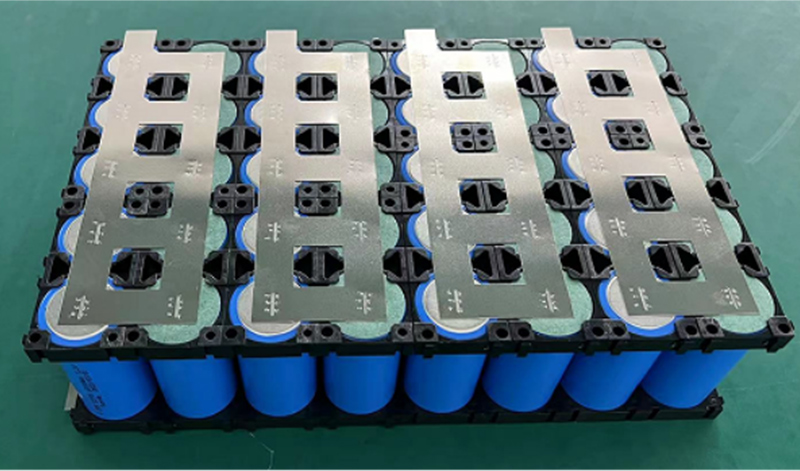
Pack structure customization generally involves the maximum size of the battery, structural strength, impact resistance, encapsulation, heat dissipation, explosion-proof, dustproof and waterproof requirements. These factors have an important impact on the safety, adaptability and reliability of the battery, so the battery has a special installation environment for the application needs, need to be clearly explained in advance with the battery customization manufacturer.
Summarized above, customized LiFePO4 battery requires comprehensive consideration of three key parts: cell customization, BMS customization and Pack structure customization. Buyers should provide detailed battery parameters and size requirements when customizing LiFePO4 batteries, and fully communicate with the battery manufacturer to confirm the specifications. For buyers who are not clear about the relevant data, they can communicate with the manufacturer's engineers about the detailed requirements of the customized batteries, and then communicate with the manufacturer to provide design solutions and then confirm the communication. Only when we fully consider these issues and work with professional manufacturers (customized consulting: [email protected]), we can get the customized LiFePO4 battery that meets your requirements.
Can I Replace My Lead-Acid Battery with a LiFePO₄ Battery
As energy storage technology advances, many users are asking whether they can replace traditional lead-acid batteries with lithium iron phosphate batteries (LiFePO₄ batteries) . The answer is yes—in most cases, LiFePO₄ batteries can directly replace lead-acid batteries, offering significant performance, safety, and long-term cost advantages. However, understanding key differences is essential to ensure a smooth and successful upgrade.
Read MoreLiFePO₄ Battery Depth of Discharge and Cycle Life Explained
Lithium Iron Phosphate batteries (LiFePO₄ batteries) are widely recognized for their safety, stability, and long service life. When evaluating these batteries for solar energy storage, RVs, marine systems, or backup power, two key concepts often come up: depth of discharge (DoD) and cycle life. Understanding how these factors relate helps users maximize performance and extend battery lifespan.
Read MoreHow to Maintain and Store a 12V/24V LiFePO₄ Battery
Lithium Iron Phosphate (LiFePO₄) batteries are known for their safety, long lifespan, and low maintenance requirements. However, proper maintenance and correct storage practices are still essential to ensure reliable performance and maximize service life, whether the battery is used in a 12V or 24V system. By following a few best practices, users can protect their investment and keep their energy storage system operating efficiently for years.
Read More